How Professionals Service a Norweco Singulair Green System


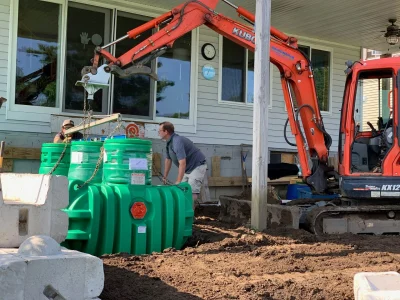
A Norweco Singulair Green system is not serviced the way a basic septic tank is pumped and forgotten. It is a treatment plant in miniature, with moving air, biological treatment, recirculation, controls, and discharge quality that depends on regular attention. When a professional walks up to one of these systems, the job is not simply to clean it out. The job is to keep a living process stable, verify that the equipment is operating as designed, and catch small problems before they turn into a costly failure or a permit issue.
That distinction matters. Homeowners often see the riser lids and assume all underground wastewater systems are roughly the same. They are not. A conventional septic system can limp along for a long time while performing poorly. An aerobic treatment unit, especially a system such as the norweco singulair green, tends to show its condition more directly through alarms, water clarity, odor, sludge levels, or irrigation and discharge performance. Good service is less about reacting to alarms and more about preserving treatment quality month after month.
What professionals are really looking after
The heart of the system is biological treatment supported by mechanical components. Wastewater enters, solids settle and break down, air is introduced to support aerobic bacteria, and clarified water moves through later stages before dispersal or discharge, depending on the installation and local rules. Because treatment depends on both biology and equipment, service technicians work on two tracks at once. They inspect motors, diffusers, controls, timers, floats, tubing, and connections. At the same time, they read the condition of the process itself by looking at color, odor, foam, scum, mixed liquor character, sludge accumulation, and final effluent clarity.
That second skill is where experience shows. A trained technician can open a system and get a quick sense of whether it is healthy. A faint earthy smell is one thing. A harsh septic odor is another. Light brown, active aeration with fine bubbles tells a different story than dead spots, black water, or heavy grease mats. These are not abstract observations. They guide what gets adjusted, cleaned, or escalated.
Service also has a compliance side. In many areas, aerobic systems must be inspected on a schedule and documented by a licensed provider. The frequency varies by jurisdiction and permit conditions, but quarterly service is common. A professional is usually checking not only whether the equipment runs, but whether it runs in a way that supports the effluent quality expected by the permit.
The first few minutes at the site matter more than most people think
Experienced service techs do not start by grabbing tools and opening lids. They start with context. They look at the yard for signs of surfacing water, unusually green vegetation, vehicle traffic over the treatment area, damaged covers, or evidence that roof drains and sump pumps have been tied into the system. They ask the owner whether alarms have sounded, whether occupancy has changed, whether bleach use has increased, or whether a garbage disposal was recently added. A short conversation can explain half the symptoms.
A home that went from two occupants to six can overload a system without a single broken part. A vacation home that sits empty for months and then hosts a holiday crowd presents a different challenge. So does a house where someone has been pouring paint rinse water, backwash from a water softener, or strong disinfectants into the plumbing. The norweco singulair green can be a very robust treatment system when it is used as intended, but it still depends on a stable wastewater stream.
Opening the system safely and methodically
Safety is not window dressing in this trade. Lids can be heavy, chambers can contain hazardous gases, and electrical components may be energized. A careful technician isolates power when needed, verifies alarm behavior, and uses proper lifting and protective equipment. They avoid unnecessary exposure and they do not enter confined spaces without the right procedures, which for routine residential service generally means they do not enter them at all.
Once the lids are off, the inspection becomes very visual. The service provider checks liquid levels first. High water in the wrong compartment can point to a downstream restriction, a failed pump, a stuck float, or saturated dispersal conditions. Low water can indicate a leak or a transfer issue. Then the technician watches the system in operation. Aeration should be active where expected. Pumps should cycle correctly if the design includes timed dosing or recirculation. Alarm floats should be intact and free to move.
How the aeration equipment is serviced
Aeration is one of the defining features of this kind of treatment system, so air delivery gets close attention. Depending on the specific equipment package and installation, a technician may inspect or service the air pump excavatingnj.com norweco singulair green or aspirator assembly, confirm pressure or airflow indirectly through operation, and examine the condition of diffusers, tubing, or intake filtration. A weak air supply can quietly degrade treatment long before a homeowner notices anything at a sink or toilet.
In practice, this is where subtle problems often turn up. A diaphragm or compressor component may be wearing out, producing less air than before while still making enough noise to sound normal from the yard. An intake may be partially obstructed by dust or insects. Condensation in an air line can interfere with performance. A diffuser may be fouled with biological growth or mineral scale. None of those issues necessarily causes immediate failure, but all of them reduce treatment margin.
A seasoned technician also listens. Equipment develops a voice over time. Bearings, diaphragms, vibrating housings, and loose mounts tend to announce themselves before they fail outright. One of the most useful habits in the field is simply standing still for a moment and hearing the system run.
Settling, sludge, and the question of pumping
Homeowners often ask one question first: does it need pumping? The answer is based on observation and measurement, not calendar folklore. Professionals evaluate sludge and scum accumulation in the relevant compartments, check whether solids are carrying over where they should not, and assess whether the tank still has the working volume needed for effective treatment. Pumping intervals vary widely with household size, water use, food waste loading, and maintenance quality.
A family of five that uses a garbage disposal heavily may need solids management sooner than a retired couple with conservative water habits. A system with excellent aeration but poor trash discipline can still end up with excess solids. On the other hand, pumping too aggressively or unnecessarily does not improve treatment on its own. The objective is to remove accumulated solids before they impair process performance, not to strip the system on an arbitrary date.
When pumping is indicated, a professional coordinates it with inspection. This matters because pumping can hide symptoms if the service provider did not look first. It is much easier to diagnose carryover, abnormal foam, grease loading, or compartment imbalance before the tank is emptied.
Controls, floats, and alarms are a major part of the service call
Modern wastewater treatment systems fail electrically almost as often as they fail biologically. Timers drift. Float switches hang up. Alarm circuits corrode. Condensation finds its way into enclosures. A proper service visit includes the control side, not just the wet side.
A technician checks that floats move freely and respond as intended. They inspect cords for damage, verify that alarm indicators work, and look for signs of overheating, insect intrusion, moisture, and loose connections in the panel. If the system includes a pump tank or dosing arrangement, run times and cycle behavior may be observed or tested. A pump that starts but draws excessive current, short cycles, or fails to meet expected delivery can be on borrowed time even though it has not completely quit yet.
This is also the point where records become valuable. If the same provider has been servicing the unit over several cycles, they may notice a trend rather than a one-time event. Sludge inches up faster than before. Alarm history increases. Effluent loses clarity in wet weather. Pump cycles lengthen over a year. Trends are often where preventive maintenance earns its keep.
What a professional cleans, and what they leave alone
Not every part should be scrubbed spotless. Biological treatment relies on established microbial communities, so indiscriminate washing or chemical cleaning can do more harm than good. Professionals target cleaning where it restores function. That may include filters, screens, effluent devices, diffuser surfaces, sensor floats, pump vault components, or spray and drip distribution elements if the site uses them. They remove grease mats and debris that interfere with operation. They clear obstructions and correct buildup that changes water movement.
What they generally avoid is turning the system into a sanitized empty shell just because it looks dirty. Wastewater treatment is not a kitchen appliance. Clean enough to function properly is the standard, not visually pristine.
I have seen systems where a well-meaning owner hosed down components with strong cleaners after reading about odor control online. The result was a biological slump that took time to recover from. Odor decreased for a day and then treatment quality went sideways. Professionals know the difference between mechanical fouling and normal biological film.
Effluent quality tells a story
A big part of servicing a norweco singulair green system is judging the quality of the water leaving the treatment process. In some jurisdictions and some service agreements, that may involve field observations and routine operational checks rather than laboratory sampling. In others, sampling may be required. Either way, the person servicing the unit should be looking closely at clarity, solids carryover, color, and odor.
Clear or relatively clear effluent with low visible solids usually suggests that the treatment train is functioning reasonably well. Cloudy discharge, flecks of suspended material, gray or black coloration, or strong sewage odor indicates a process problem or solids breakthrough. At that point, the technician starts connecting dots. Is aeration weak? Is the settling stage overloaded? Are the return pathways blocked? Has hydraulic loading increased? Did grease or wipes enter the system? The right answer usually comes from several clues together, not one dramatic symptom.
Problems that show up again and again
Certain failure patterns are common enough that most professionals can spot them quickly. The specifics vary by site, but these are the ones that come up most often:
- weak or failed aeration equipment that reduces oxygen transfer
- excessive solids or grease loading from heavy household use
- clogged filters, transfer points, or dispersal components
- float, timer, or pump issues in systems with dosing or recirculation
- homeowner practices that disrupt biology, such as harsh chemical dumping or flushing wipes
What matters is not just identifying the symptom but understanding whether the cause is mechanical, hydraulic, biological, or behavioral. If you replace a pump but ignore a downstream restriction, you have not fixed the system. If you pump a tank but leave a failing air supply untouched, you have bought a little time and not much more.
Servicing the dispersal side
The treatment unit gets most of the attention, but the dispersal method deserves equal respect. Some installations send treated effluent to a drainfield, some to low-pressure distribution, some to drip irrigation, and some to spray systems where allowed. A professional service visit should include whatever portions of that downstream network are accessible and relevant to the permit.
For spray or drip distribution, the service provider may inspect filtration, pressure behavior, zone operation, visible wet spots, overspray, or clogged emitters and heads. For subsurface dispersal, they look for surfacing effluent, unusual vegetation patterns, and signs that the field is staying too wet. A perfectly maintained treatment tank cannot compensate for a failed dispersal area. Conversely, a marginal treatment process will often reveal itself first in the field.
One field example stays with me. A system looked acceptable at the tank, but the lawn downslope had a narrow stripe of persistent lush growth. The issue turned out not to be the biology at all. A distribution component had developed an imbalance, pushing more flow to one section than intended. Without walking the site, that clue would have been missed.
The service visit usually ends with adjustment, documentation, and homeowner guidance
A true professional does not just tighten a fitting, close the lid, and drive away. They document what they found, what they corrected, what still needs attention, and when follow-up should occur. If local rules require reporting, they complete it. If the owner’s habits are contributing to the problem, they explain that plainly.
The homeowner conversation often matters more than people expect. Most system abuse is not malicious. It is ordinary household behavior that no one connected to wastewater treatment. Long showers from more occupants, frequent bleach loads, feminine hygiene products, wipes labeled flushable, fryer grease, or renovation debris can all change performance. When owners understand cause and effect, service calls become less dramatic and more preventive.
Useful guidance is usually brief and specific:
- spread laundry loads through the week rather than doing many back to back
- keep grease, wipes, and non-biodegradable items out of the plumbing
- respond to alarms promptly instead of silencing and ignoring them
- protect lids and treatment areas from vehicle traffic
- keep records of service dates, repairs, and unusual events
That kind of advice is ordinary, but it preserves treatment quality better than a lot of expensive emergency work.
Why seasoned technicians think in patterns, not isolated parts
One of the biggest differences between basic maintenance and professional service is pattern recognition. Newer technicians may focus on the component directly in front of them. Experienced ones think across the whole treatment chain. A little extra foam might be harmless in one system and meaningful in another. A slightly high water level after heavy rain might be normal at one site and a red flag at another because of the field history. No single reading explains everything.
This is especially true with systems that are technically functioning but not quite right. The alarm is quiet. The pump runs. The air supply is on. Yet the effluent is duller than it should be and solids are creeping farther downstream. That is the kind of call where records, operator instinct, and careful observation pay off. You look for combined causes: a small aeration decline, a gradual solids rise, and a recent increase in occupancy. None seems catastrophic alone. Together, they explain the change.
Repairs versus replacement, and when judgment matters
Not every issue calls for major replacement. Some problems are inexpensive to correct if caught early, such as a fouled filter, a sticking float, a damaged connection, or a failing alarm buzzer. Others justify a more serious repair plan. An aging compressor, a tired pump, recurring control issues, or a dispersal network that no longer accepts flow can move beyond quick fixes.
Professionals also weigh the age of the equipment, the history of prior repairs, parts availability, and the consequences of downtime. Spending modestly to restore a stable system makes sense. Repeatedly patching a component that is near end of life often does not. The right answer is rarely the cheapest line item on the day of service. It is the option that restores reliable treatment with the fewest future disruptions.
What homeowners should expect from a thorough service company
A strong service provider is not just licensed or factory familiar. They are consistent. They arrive with records, inspect the entire treatment process, communicate clearly, and explain what is urgent versus what can be scheduled. They do not rely on scare tactics, and they do not shrug off symptoms because the alarm has not sounded yet.
For a system like the norweco singulair green, that thoroughness protects both performance and cost. Neglected aeration, deferred solids management, or a silent control problem can turn a routine service contract into an excavation and replacement job sooner than anyone wants. On the other hand, regular professional service often keeps these systems running very well for years, even under demanding household use, because the problems are addressed while they are still small.
That is really the point of the whole exercise. Professionals service these systems to preserve a treatment process, not merely to satisfy a checklist. They watch the biology, the hydraulics, the mechanics, and the site conditions together. Done properly, the visit is part inspection, part maintenance, part troubleshooting, and part stewardship. That is what keeps a sophisticated onsite system doing the unglamorous but essential work it was installed to do.
Excavating New Jersey LLC
406 County Rd 565, Wantage, NJ 07461, United States
+1 973-791-4284
FAQ About norweco singulair green
How much does a NORWECO septic system cost?
The installed cost depends on the selected unit, engineering, site access, excavation, electrical work, disposal-field design and required approvals. A tank-only price is not a complete installation quote. Ask Excavating New Jersey LLC for a site-specific, itemized estimate that also explains ongoing service costs.
How does a Norweco septic system work?
The Singulair Green uses pretreatment, aeration, clarification and filtration to treat domestic wastewater. In the aeration chamber, oxygen supports bacteria that break down organic material. The Bio-Kinetic unit provides further filtration and flow equalization. Final effluent disposal must follow the property's approved design and applicable requirements.
What is the average lifespan of a septic system?
There is no guaranteed lifespan for every system. Design, installation, soil conditions, wastewater loading and regular maintenance all matter, and mechanical parts may need replacement before the tank. For a Singulair Green system, follow the manufacturer's service schedule and have a qualified provider assess its condition and pumping needs.